
recipes /
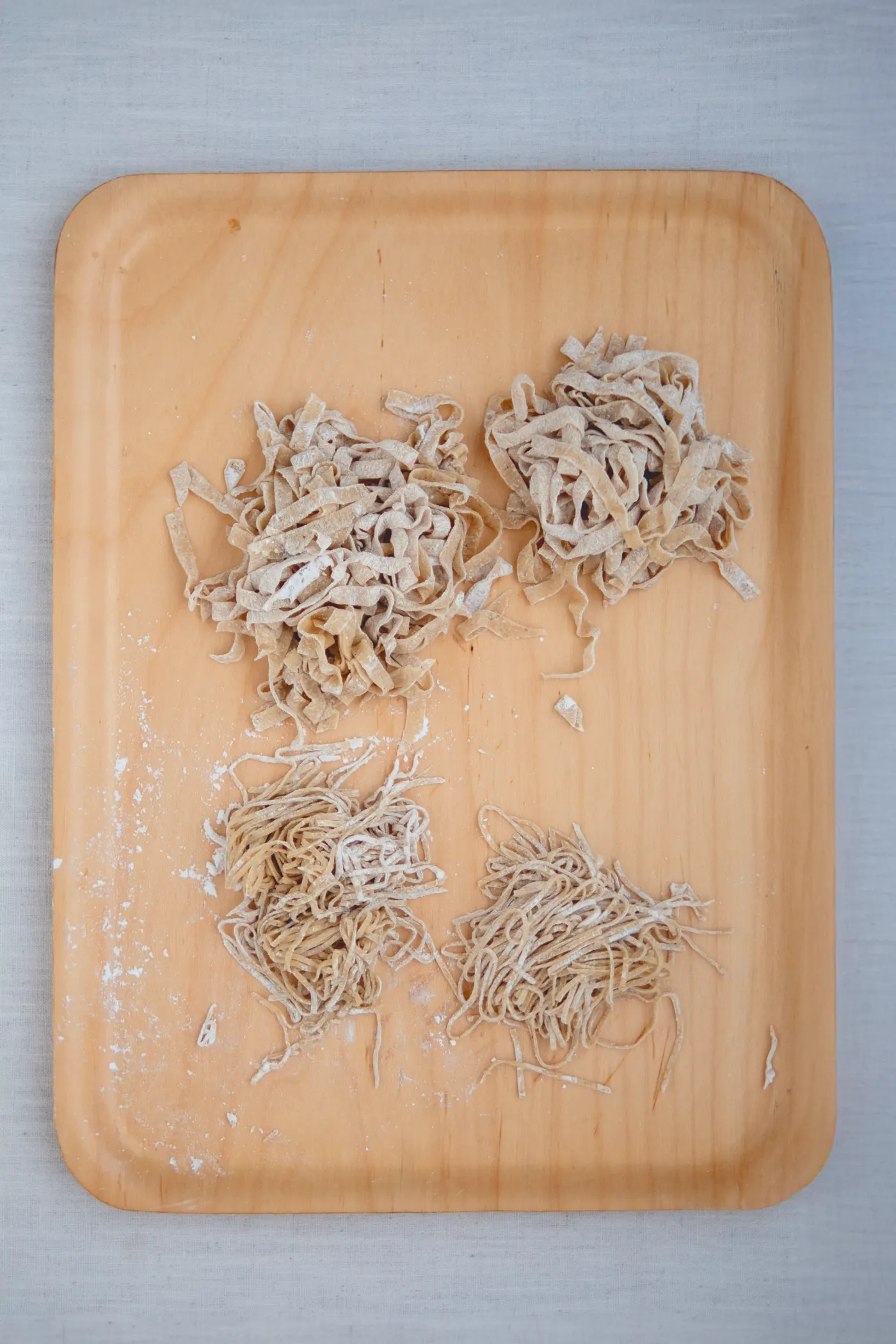
gluten-free fresh pasta
with durra, millet & tapioca flour
Fancy making your own pasta at home but avoiding gluten? Then you've come to the right place! With our recipe and da Carla's organic flours, you can create fantastic gluten-free fresh pasta. We've had incredibly positive feedback, even from those who usually eat gluten, and we really hope you'll love it too!
da Carla's organic durramjöl and millet flour are nutrient-rich bases that provide fibre, protein, minerals such as iron and magnesium, and natural antioxidants. Together with tapioca flour and glutinous rice flour, they create a dough that's easy to work with and a pasta with a lovely, elastic texture.
Ingredients:
- 45 g rice flour (fine, white)
- 40 g glutinous rice flour (Mochiko flour)
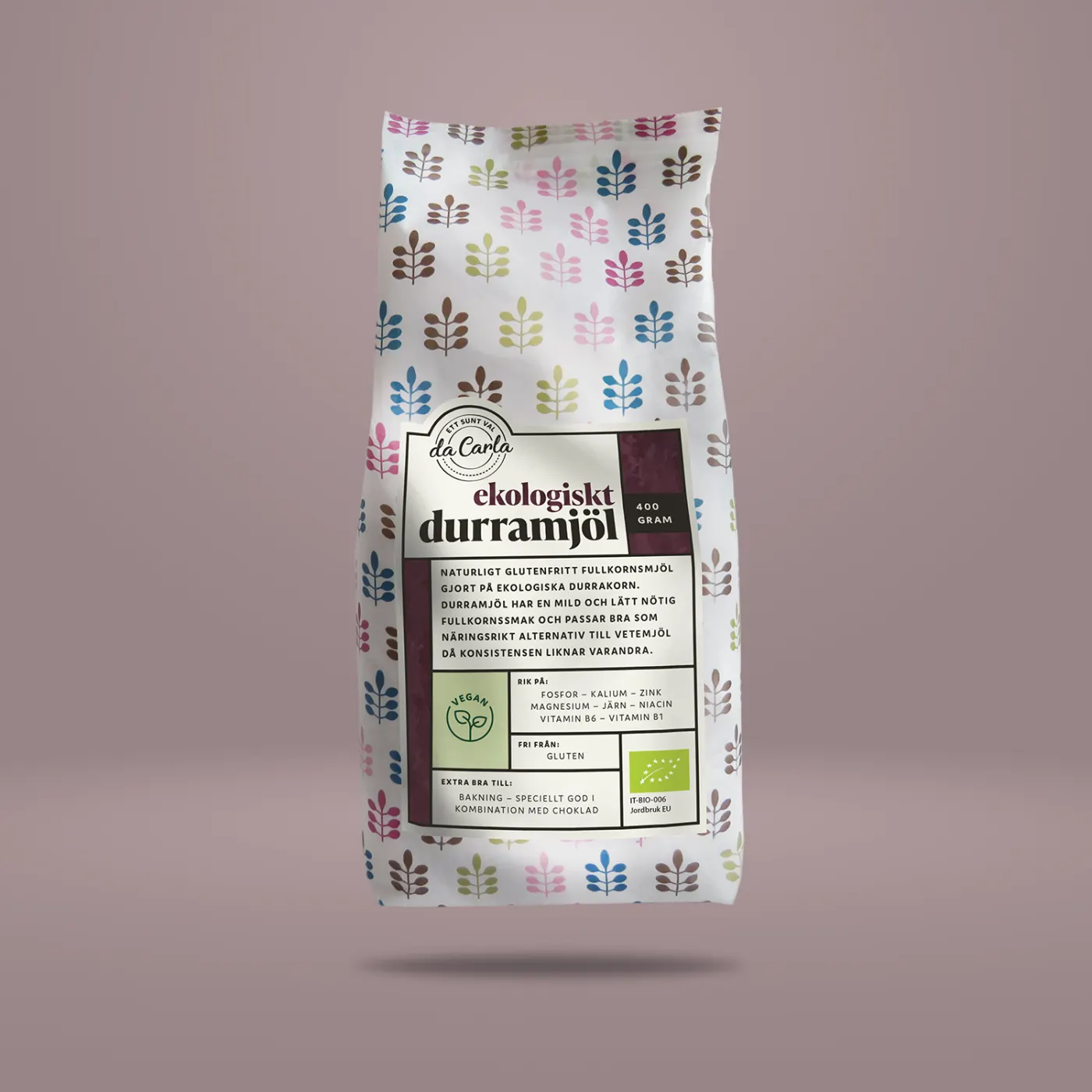
- 25 g da Carla organic durramjöl
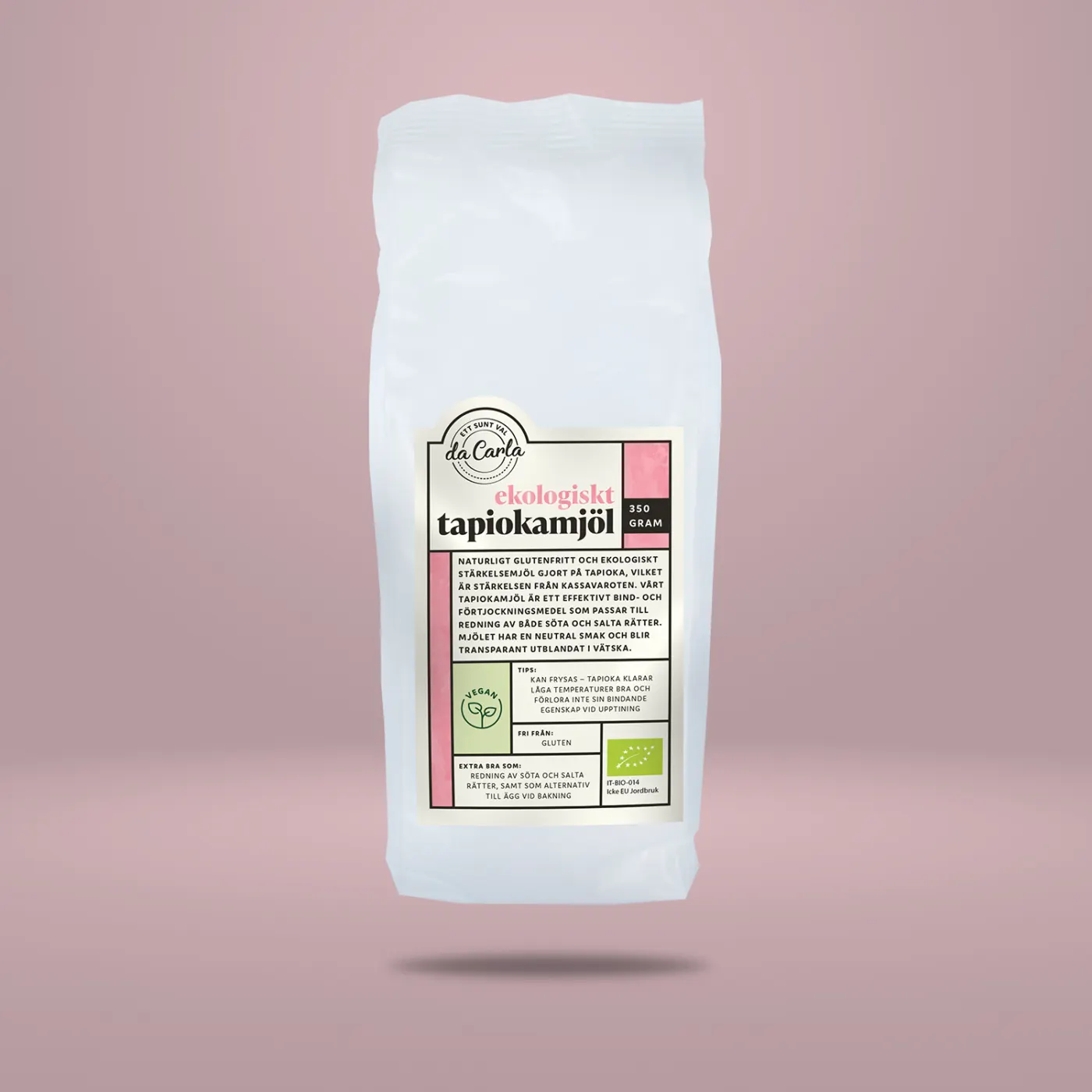
- 80 g da Carla organic Tapiokamjöl
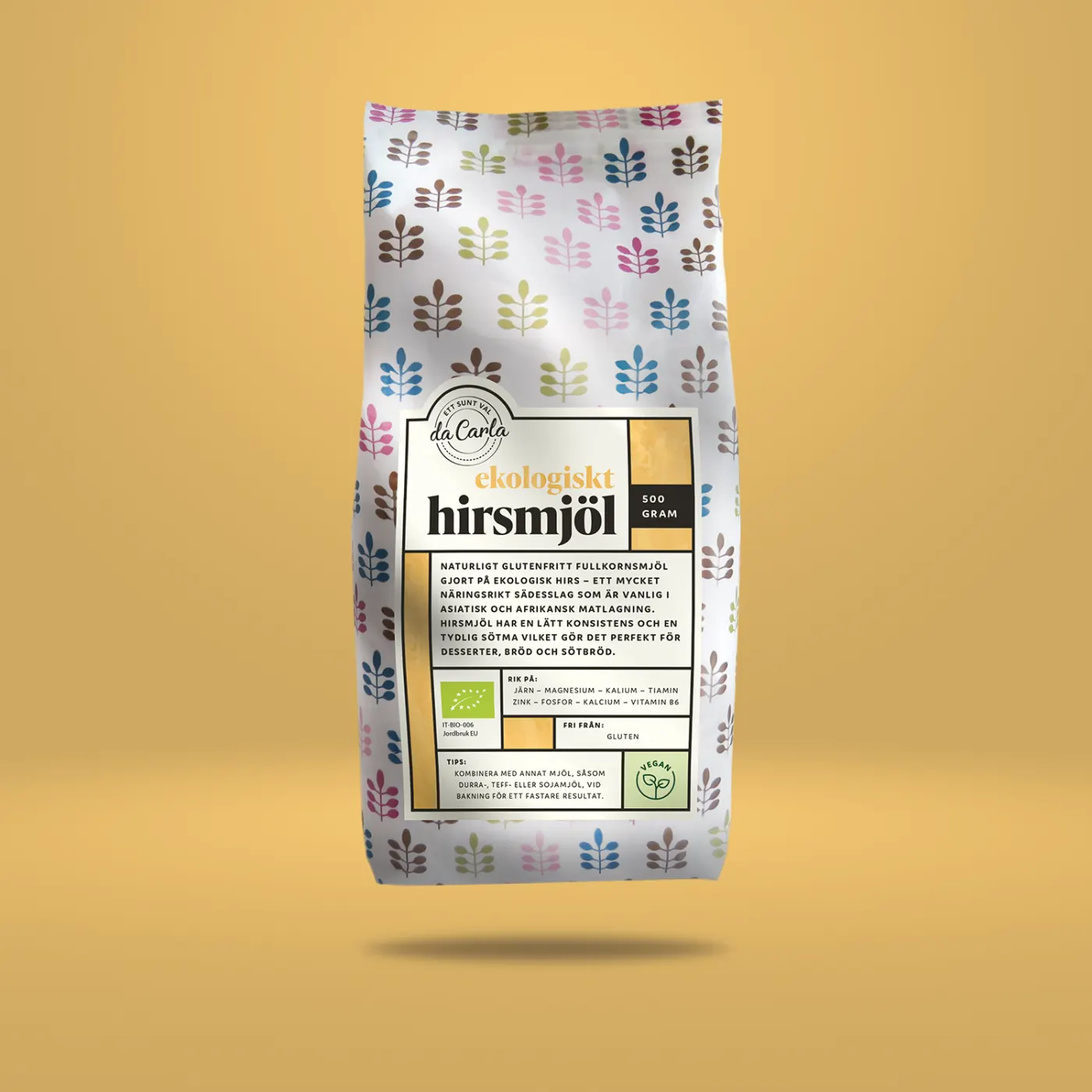
- 30 g da Carla organic hirsmjöl
- 8 g xanthan gum
- ¼ tsk fine sea salt
- 3 eggs + 1 egg yolk (medium eggs, about 165 grams total weight)
Here's how:
Make the dough
- Mix the dry ingredients (flour, xanthan gum, salt) in a large bowl. Pour the mixture out onto a clean worktop. Make a large well in the middle and crack in the eggs + egg yolk. Whisk the eggs gently with a fork. Start drawing in flour from the edges, a little at a time, until a dough begins to form.
- When the dough becomes too firm for the fork – continue kneading with your hands. It should be firm and tight. If it's too dry, add 1/8 tsk water (only if needed). If rolling by hand: add 1/4 tsk cold water from the start.
- Knead the dough for about 10 minutes until smooth and elastic.
- Wrap the dough tightly in cling film. Store in the fridge for 12–24 hours.
Roll and shape the pasta
- Divide the dough into 6 pieces. Keep the pieces you're not using wrapped in plastic.
- Set the pasta machine to the thickest setting. Dust lightly with mochiko flour.
- Flatten a piece of dough with your hands. Roll it a little with a rolling pin if needed so it fits into the machine. Run it through the machine on the thickest setting a few times. Fold together and run through again if needed. Avoid extra flour.
- Reduce the thickness step by step, running the dough through once per level until you reach the second-thinnest setting (usually level 5 of 6).
- Shape the pasta directly with machine attachments (e.g. spaghetti/tagliatelle) or use it for filled pasta (ravioli, tortellini etc.).
- Knead together the dough scraps and run through from the start.
- Place the finished pasta on a lightly floured tray or chopping board. Continue until all the dough is used.
Cooking, storing and serving
- Cook straight away: Regular pasta: Boil in salted water for about 3 minutes.
- Filled pasta: Boil for 5–8 minutes depending on thickness.
- Taste as you go – the pasta should be al dente.
- Store in the fridge: Regular pasta: Airtight container. Filled pasta: Layered with baking paper in between in a container with a lid.
- Keeps for about 1–2 days.
- Freeze: Place the pasta on a tray lined with baking paper. Freeze quickly. Transfer to freezer bags or an airtight container.
- Keeps for up to 3 months.
- Cook straight from frozen – no need to thaw.
Serve
- Serve freshly cooked with your favourite sauce. Examples: tomato sauce, butter and sage, cream sauce, olive oil and parmesan.
Cook it with da Carla
Newsletter
Keep up with the good stuff
One letter a month: recipes, news and small shortcuts for an easier everyday — a healthy choice for tutti.